

The Kingdom of Buganda has called on Ugandans to actively participate in tourism, stressing that the sector should not be reserved for foreigners alone.
The Kingdom hopes that domestic engagement will help preserve cultural heritage and boost regional tourism collaboration.
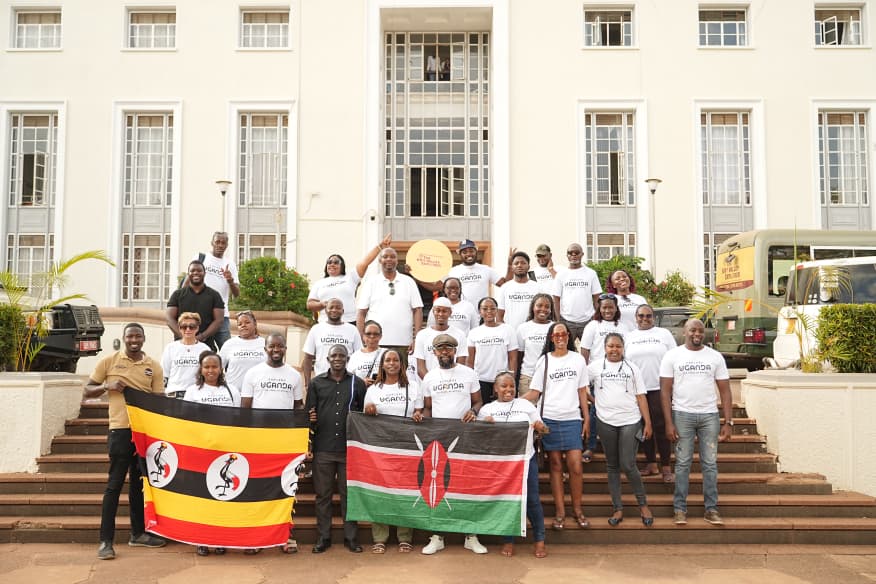
During a guided tour for 35 Kenyan tour operators, Mr Najib Nsubuga, executive director of the Buganda Heritage and Tourism Board (BHTB), encouraged Ugandans to explore and promote their own historical and cultural sites.
“We encourage Ugandans to take part in tourism because it’s through participation that we can grow the sector and preserve our culture for future generations,” Mr. Nsubuga said.
The delegation toured several iconic Buganda landmarks, starting at the Kasubi Royal Tombs—a UNESCO World Heritage Site and burial grounds of Buganda kings—and the House of Muzibu-Azaala-Mpanga, a sacred site known for its distinctive architecture and spiritual significance.
The group then visited Bulange, the seat of the Buganda Parliament, where they explored the Lukiiko Chamber and learned about the Kingdom’s traditional governance and administrative structures.
The tour concluded at the Kabaka’s Palace (Lubiri) at Mengo, a site central to Buganda and Uganda’s history.
Mr Nsubuga explained that hosting the Kenyan delegation was part of a broader initiative to strengthen East African tourism ties and promote cross-border cooperation.
“Such visits strengthen regional cooperation and help boost the flow of tourists between Kenya and Uganda,” he said.
Mr Alex Mwakideu, a Kenyan journalist and leader of the visiting delegation, praised Buganda’s cultural richness.
“The attractions we’ve seen here are truly amazing—rich in culture and tradition. Buganda has a lot to offer to the world,” he said.
The Buganda Heritage and Tourism Board continues to drive initiatives aimed at revitalizing cultural and heritage tourism, positioning Buganda as a key destination for both local and international visitors, while fostering a deeper appreciation of East Africa’s shared cultural heritage.
